A 503A compounding pharmacy prepares medications for individual patients from patient-specific prescriptions and is overseen mainly by state boards of pharmacy. A 503B outsourcing facility is registered with the FDA, must follow current good manufacturing practice (CGMP), and can compound larger batches with or without prescriptions, for example for office or hospital use.
Both names come from sections of the Federal Food, Drug, and Cosmetic Act. Knowing which one you're dealing with tells you how a pharmacy is regulated, whether it needs a prescription for each patient, and who it typically serves.
What Is a 503A Compounding Pharmacy?
Section 503A of the Federal Food, Drug, and Cosmetic Act describes traditional pharmacy compounding. A licensed pharmacist in a state-licensed pharmacy, or a licensed physician, compounds a drug for an identified individual patient based on a valid prescription.
When a pharmacy meets the conditions in Section 503A, the compounded drug is exempt from certain federal requirements, including FDA approval of the drug and CGMP. Day-to-day oversight comes mainly from state boards of pharmacy, and pharmacies follow United States Pharmacopeia (USP) compounding standards such as USP <795> for non-sterile preparations and USP <797> for sterile preparations.

What Is a 503B Outsourcing Facility?
Section 503B was added by the Drug Quality and Security Act of 2013. It created outsourcing facilities: compounders that choose to register with the FDA, are subject to FDA inspection, and must comply with CGMP.
An outsourcing facility can compound drugs with or without patient-specific prescriptions, so it can supply hospitals, clinics and physician offices with stock for office use. Outsourcing facilities also report the products they compound to the FDA and report adverse events.
503A vs 503B at a Glance
| 503A Compounding Pharmacy | 503B Outsourcing Facility | |
|---|---|---|
| Federal law | Section 503A, FD&C Act | Section 503B, added by the Drug Quality and Security Act (2013) |
| Main oversight | State boards of pharmacy | FDA registration and inspection, plus state licensing |
| Prescriptions | A valid prescription for an identified individual patient | With or without patient-specific prescriptions |
| Office use | Not for office stock | Can supply hospitals, clinics and offices |
| Manufacturing standard | USP compounding standards (e.g. <795>, <797>, <800>) | Current good manufacturing practice (CGMP) |
| FDA approval of the drug | No, compounded drugs are not FDA-approved | No, compounded drugs are not FDA-approved |
Neither type of compounded drug goes through FDA's drug approval process.
Which One Does a Prescription Go To?
It depends on who the medication is for. A prescription written for you, by name, can be filled by a 503A pharmacy. A clinic that wants compounded products on hand for use in the office, without a prescription for each patient, would work with a 503B outsourcing facility.
One isn't a substitute for the other. They are set up for different purposes under different sections of the same law.
Where East Coast Compounding & Pharmacy Fits
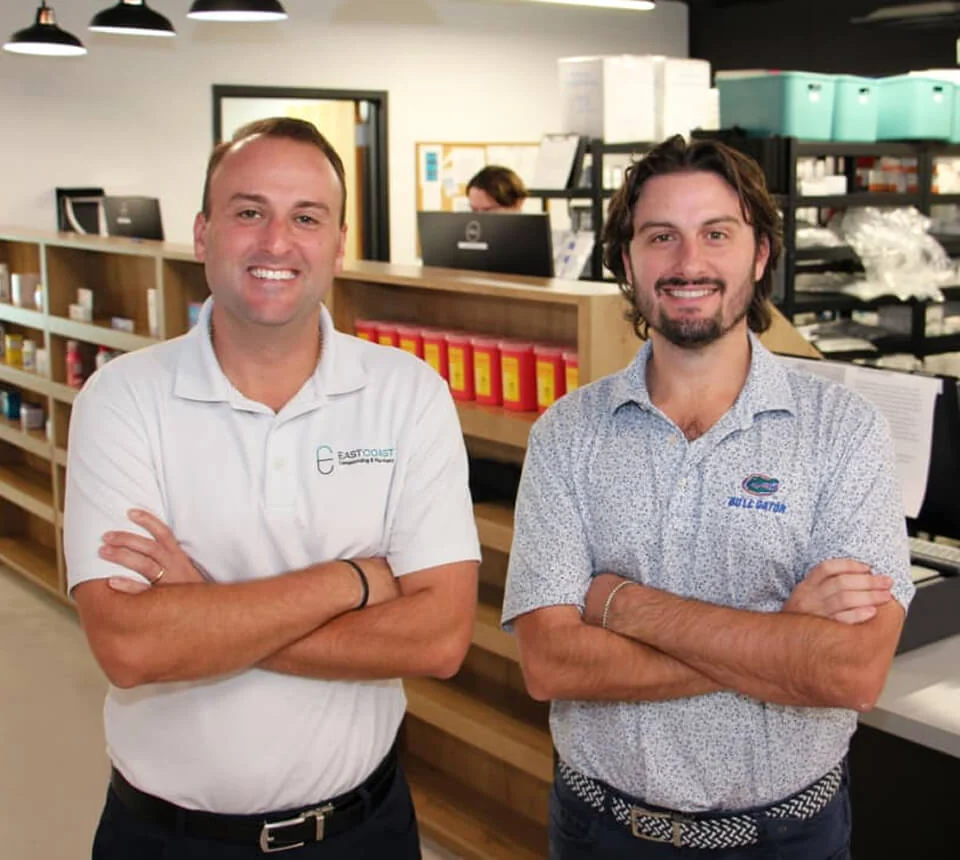
East Coast Compounding & Pharmacy is a 503A compounding pharmacy at 1617 Atlantic Blvd. in Jacksonville, Florida. We compound only from patient-specific prescriptions written by licensed prescribers, in a USP <795>, <797>, and <800> compliant lab, and we are NABP accredited and licensed in Florida and 14 other states. We are not a 503B outsourcing facility.
Frequently Asked Questions
Neither is better in general. They serve different purposes. A 503A pharmacy compounds for individual patients from their prescriptions; a 503B outsourcing facility compounds larger batches, with or without prescriptions, mainly for hospitals and clinics. Which one fits depends on who the medication is for.
A 503A compound pharmacy prepares medications for individual patients from patient-specific prescriptions written by licensed prescribers. It is licensed by state boards of pharmacy and follows USP compounding standards. East Coast Compounding & Pharmacy is a 503A pharmacy in Jacksonville, Florida.
Under federal law, the two types are 503A compounding pharmacies, which compound for individual patients from prescriptions, and 503B outsourcing facilities, which register with the FDA, follow CGMP and can compound in larger quantities for office use.
To have a medication compounded at a 503A pharmacy, you need a valid prescription from a licensed prescriber, written for you. You're welcome to call a pharmacy with questions before you have one.
References
- U.S. Food and Drug Administration. Compounding and the FDA: Questions and Answers. www.fda.gov
- U.S. Food and Drug Administration. Pharmacy Compounding of Human Drug Products Under Section 503A of the Federal Food, Drug, and Cosmetic Act (guidance). www.fda.gov
- U.S. Food and Drug Administration. Information for Outsourcing Facilities. www.fda.gov
- 21 U.S.C. 353a, Pharmacy compounding. uscode.house.gov
- 21 U.S.C. 353b, Outsourcing facilities. uscode.house.gov